1 Network
IP cameras and controllers live on your network: PoE, separate VLANs and properly sized bandwidth come first.
 Book your free consultation
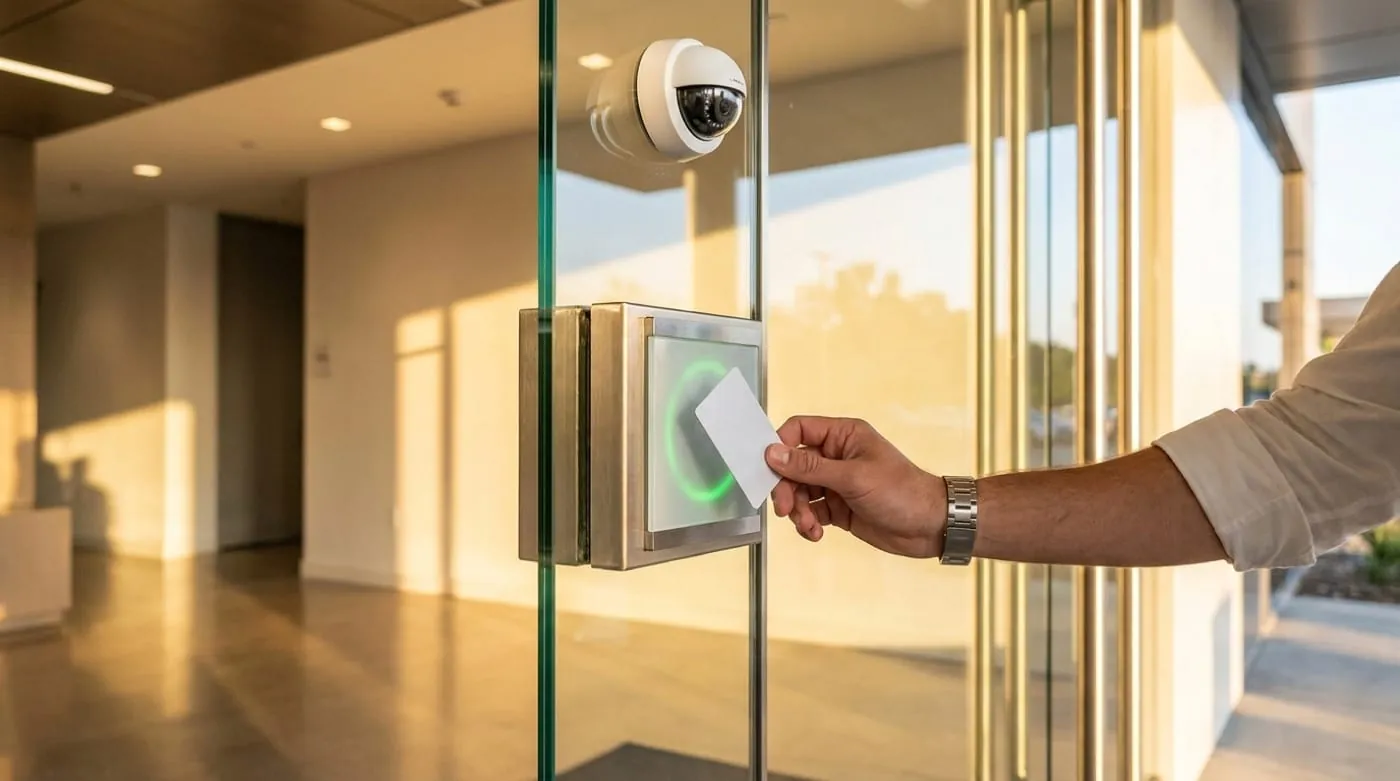
Short answer: a mid-sized company doesn't need “more cameras” — it needs to cover entrances and critical points with useful video, tie access control to that video, and run everything on a well-designed network. The costliest mistake is buying equipment first and thinking about the network later.
IP cameras and controllers live on your network: PoE, separate VLANs and properly sized bandwidth come first.
Cameras placed by objective, retention set by your policy (15–30 days is typical), and local, cloud or hybrid recording.
Cards, PIN or biometrics per door based on risk; every event tied to video.
Enough to cover entrances, high-value points and risk areas — not every square meter. A typical warehouse or office floor is well covered with 8 to 24 well-placed cameras; more poorly planned cameras just generate storage and monitoring that no one reviews.
Local (NVR) gives you control and predictable cost; cloud gives you simple remote access and resilience if the recorder is stolen. In Mexico, hybrid is the most common setup: local recording plus cloud backup for critical cameras, sized to the site's actual bandwidth.
Yes, and that's where the value is: every door event (access granted or denied) gets tied to video. To achieve that, cameras and access control need to be planned as a single project on the same network, not purchased separately.
STI designs and implements CCTV, access control and the network that supports them, as a single project. Book a free consultation and we'll review your site before talking about equipment.