1 Maintain
Stable and good enough for the business: formal support, monitoring and patching. Costs a fraction of a replacement as long as the underlying platform is still supported.
 Book your free consultation
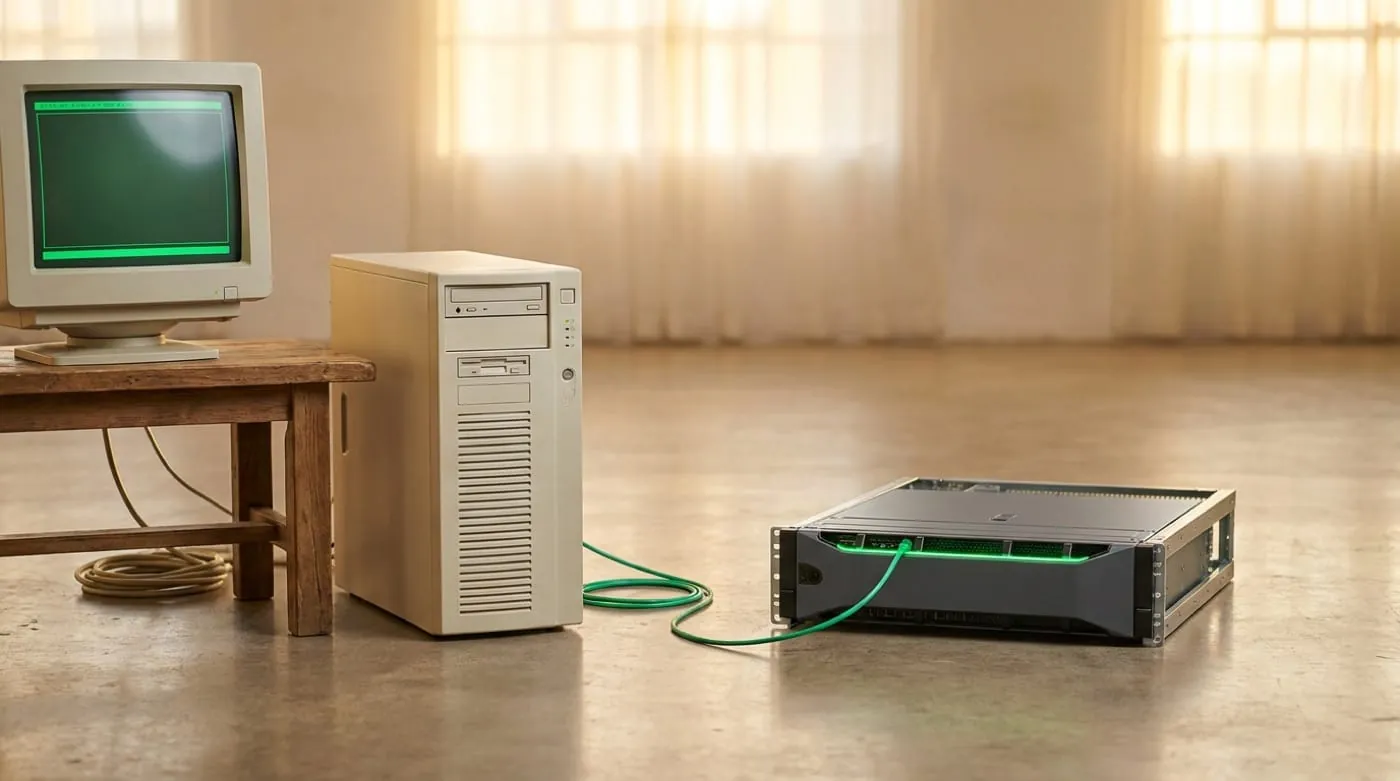
Short answer: with a critical legacy system there are three paths — maintain (stabilize and document), encapsulate (isolate it behind interfaces so everything else can evolve) or migrate in stages. The expensive mistake is the fourth path: not deciding, and running for years on a system with no backup, no documentation, and no one who understands it.
Stable and good enough for the business: formal support, monitoring and patching. Costs a fraction of a replacement as long as the underlying platform is still supported.
Virtualize it, put APIs in front, and restrict direct access. It keeps running but stops being a blocker: new systems connect to the interfaces instead.
Module by module, running the legacy system in parallel until each piece is validated. The big-bang approach is the pattern that has stopped the most operations cold.
| Situation | Path |
|---|---|
| Stable, risk contained, business satisfied | Maintain |
| Stable but holding back new projects | Encapsulate |
| Underlying platform unsupported, or the business needs what it can't deliver | Migrate in stages |
A system that's still critical to the operation, but whose technology, vendor, or original developer is no longer available or has stopped evolving it: a custom ERP built 15 years ago, an in-house billing system, or an application running on an outdated database.
It depends on the risk and the cost of replacement. If the system is stable and the risk is contained (backups, documentation, support), maintaining it is usually cheaper than a rushed replacement. Migration makes sense when the underlying hardware or software is no longer supported, or when the business needs capabilities the system simply can't provide.
Isolating it: virtualizing it, putting interfaces (APIs) in front of it, and restricting access, so the rest of the operation can evolve around it without touching it directly. It's the typical middle step before a staged migration.
STI operates and maintains critical legacy applications through end of life — and guides staged migrations without stopping the business. Book a free consultation.