1 Rules
Who gets in, through which door, during what hours, and with what credential — employees, visitors, vendors and vehicles shouldn't all follow the same rule.
 Book your free consultation
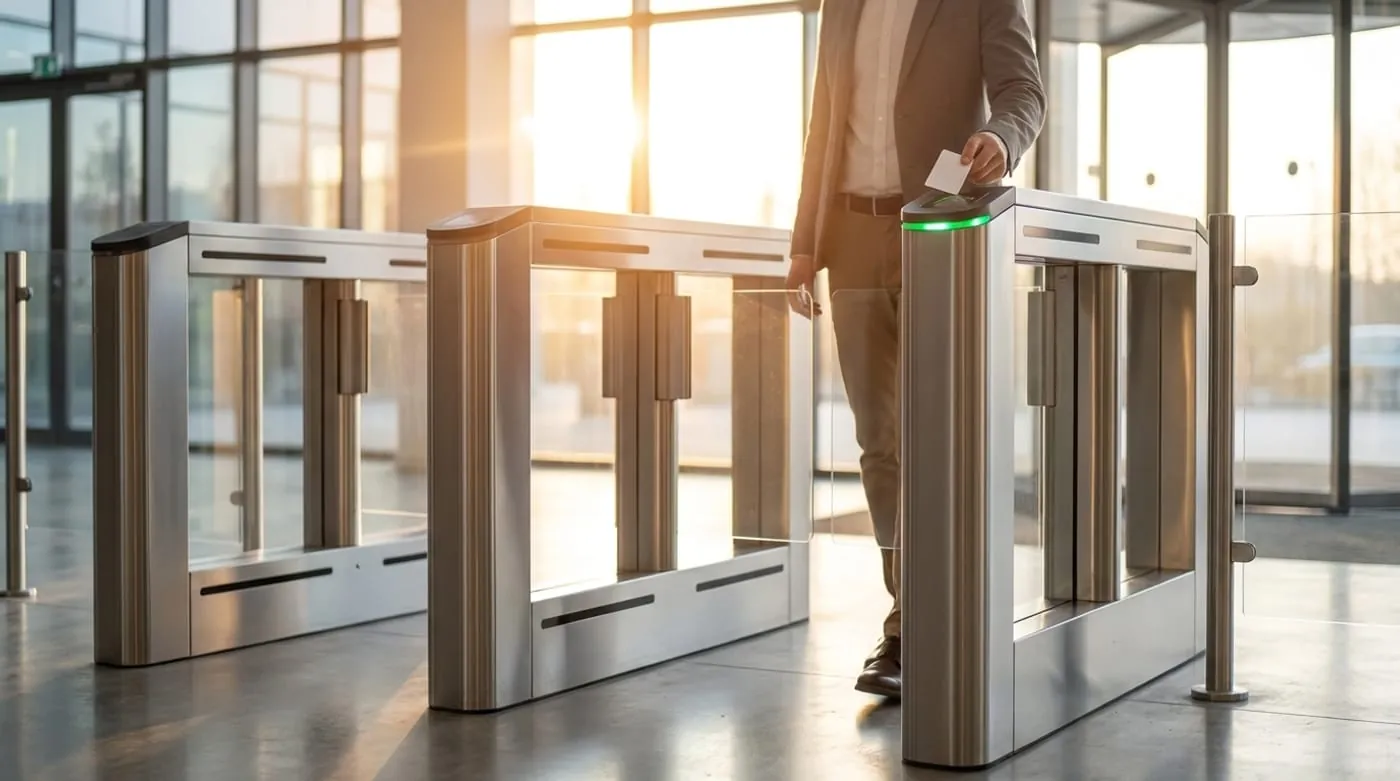
Short answer: automating entries and exits isn't about buying turnstiles — it's about deciding who can pass, where, and when, and making sure every movement gets logged on its own, with no paper logbooks or guards writing down license plates. The hardware (readers, turnstiles, barrier arms) is the last piece; the rules and the network come first.
Manual access logging fails in the same ways every time: lines at the entrance during rush hour, illegible logbooks nobody ever checks, visitors with no oversight once they're inside, and zero visibility into who's on the premises at any given moment. Once a company grows past one site, the problem multiplies — each location logs things its own way, and consolidating the information becomes impossible.
Who gets in, through which door, during what hours, and with what credential — employees, visitors, vendors and vehicles shouldn't all follow the same rule.
Readers, controllers and turnstiles all live on the company network. An access point without reliable connectivity is a door that either opens on its own or never opens at all.
Every event — access granted or denied — gets logged automatically, and if CCTV is integrated, linked to video.
Just like with CCTV, the right order is a diagnostic of the actual flow of people and vehicles, a design of rules and control points, and only then equipment selection. If your company already has cameras or a network installed, the project should build on them, not duplicate them.
Want to evaluate access automation for your company? Write to us and we'll go over it with you.